DSSSB TGT Computer Science 2026: महत्वपूर्ण Topics, Study Strategy और Revision Plan
DSSSB TGT Computer Science परीक्षा की तैयारी के लिए सबसे पहले official syllabus को checklist की तरह इस्तेमाल करें, previous-year questions solve करें और बार-बार revision करें। यह गाइड आपको बताएगी कि किन topics पर ज्यादा ध्यान देना चाहिए, कैसे 14 दिनों में पूरा syllabus revise करें और teaching methodology को कैसे integrate करें।
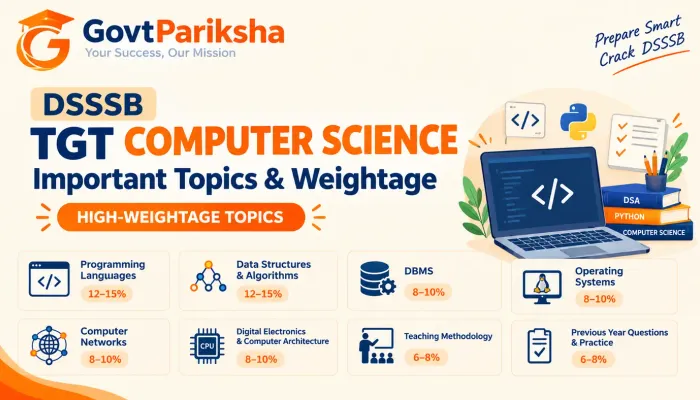
DSSSB TGT Computer Science: Quick-view revision infographic (topic priorities are a study aid, not official weightage)
1. Official Syllabus और Exam Pattern से शुरुआत करें
DSSSB TGT Computer Science का official indicative syllabus programming (C/C++), data structures, IT fundamentals, digital electronics, DBMS, computer architecture, software engineering, Java, website design, operating systems, computer networks, .NET, Linux, e-commerce, algorithms, network security, mobile computing, computer graphics, internet programming, statistics और supporting subjects को cover करता है। इसलिए केवल familiar topics पर ध्यान न दें, बल्कि पूरे syllabus को checklist की तरह पढ़ें।
मुख्य कदम:
- DSSSB की official website (dsssb.delhi.gov.in) से latest notification और syllabus PDF download करें।
- अपने exact post code (जैसे 56/24) और department के अनुसार syllabus confirm करें।
- Exam pattern (negative marking, section-wise marks) को समझें।
Quick Overview Table
| विवरण | जानकारी |
|---|---|
| परीक्षा का नाम | DSSSB TGT Computer Science |
| आयोजक | Delhi Subordinate Services Selection Board (DSSSB) |
| पद | Trained Graduate Teacher (TGT) Computer Science |
| Official Syllabus Link | DSSSB Indicative Syllabus |
| Post Code (उदाहरण) | 56/24 (DoE) |
| Syllabus PDF | pc_56-24.pdf |
2. High-Priority Computer Science Topics
DSSSB TGT Computer Science में सबसे ज्यादा स्कोरिंग topics Programming, DBMS, Operating Systems, Computer Networks और Digital Electronics हैं, लेकिन official syllabus के सभी हिस्सों को planned revision time दें।
2.1 Programming, Problem Solving और Data Structures
C programming fundamentals (data types, operators, loops, functions, arrays, pointers, structures, file handling), C++ OOP concepts (classes, objects, inheritance, polymorphism, encapsulation, constructors) और data structures (stacks, queues, linked lists, trees, searching, sorting, complexity) पर ध्यान दें। Short programs trace करके output predict करने की practice करें।
मुख्य Focus Areas:
- C/C++ syntax और program tracing
- Stack, Queue, Linked List के operations
- Tree traversals (inorder, preorder, postorder)
- Sorting algorithms (bubble, quick, merge) की time complexity
2.2 Database Management Systems (DBMS)
DBMS एक core area है — relational tables, primary/foreign keys, ER diagrams, relational algebra, SQL queries, joins, constraints, normalization (1NF, 2NF, 3NF, BCNF), transactions, ACID properties, concurrency control, indexing और recovery को revise करें। केवल notes पढ़ने के बजाय SQL queries लिखने की practice करें।
2.3 Operating Systems और Linux
OS functions, process/thread concepts, CPU scheduling algorithms, synchronization, deadlocks, memory management (paging, segmentation), file systems को पढ़ें। Linux basic commands, file permissions, processes और shell fundamentals को revise करें।
2.4 Computer Networks, TCP/IP और Security
OSI और TCP/IP models, network devices, transmission media, IP addressing, subnetting basics, routing/switching को समझें। TCP, UDP, HTTP/HTTPS, DNS, DHCP, FTP, SMTP के roles जानें। Security में encryption, authentication, firewalls, malware, digital signatures और common threats को cover करें। Comparison tables बनाकर protocols याद करें।
2.5 Computer Fundamentals, Architecture और Digital Electronics
Number systems और conversions, Boolean algebra, logic gates, truth tables, computer generations, I/O devices, memory units, CPU components, registers, cache और memory hierarchy को revise करें। Digital electronics में logic gates और Boolean expressions को हाथ से solve करने की practice करें।
2.6 Web Technologies, Software Engineering और अन्य Topics
HTML, CSS, JavaScript, XML, website design basics, SDLC, software testing और maintenance को cover करें। Official syllabus में Java, .NET, e-commerce, MIS, mobile computing, computer graphics, statistics, basic physics, business communication, accounting और economics भी शामिल हैं — इन्हें final day तक न छोड़ें, बल्कि planned revision time दें।
Topic-wise Priority Table (Study Aid)
| Topic | Priority | क्यों महत्वपूर्ण? |
|---|---|---|
| Programming (C/C++) | High | Output tracing और logic building |
| Data Structures | High | Algorithm complexity और operations |
| DBMS | High | SQL queries और normalization |
| Operating Systems | High | Scheduling और memory management |
| Computer Networks | High | Protocols और IP addressing |
| Digital Electronics | Medium | Logic gates और Boolean algebra |
| Web Technologies | Medium | HTML/CSS/JS basics |
| Software Engineering | Medium | SDLC और testing |
| Teaching Methodology | High | शिक्षण पद के लिए अनिवार्य |
| अन्य (Java, .NET, Statistics) | Low-Medium | Syllabus completeness के लिए |
Note: यह priority table एक study aid है, official chapter-wise weightage नहीं। DSSSB कोई official weightage जारी नहीं करता।
3. Teaching Methodology को Ignore न करें
Teaching post के लिए educational understanding subject knowledge के बराबर महत्वपूर्ण है। Learning and teaching, classroom management, lesson planning, curriculum, inclusive education, assessment for learning, learner differences और subject-specific pedagogy को revise करें। Scenario-based questions practice करें — जैसे mixed-ability classroom के लिए उपयुक्त teaching method चुनना या memorisation के बजाय understanding check करने वाला assessment design करना।
4. Simple 14-Day Revision Plan
नीचे दिया गया 14-दिवसीय plan एक sample है, fixed rule नहीं। अगर आपके पास ज्यादा समय है, तो प्रत्येक block को expand करें और notification के pattern के अनुसार General Awareness, Reasoning, Arithmetic, Hindi और English की तैयारी जोड़ें।
| Days | Main Focus | Daily Task |
|---|---|---|
| 1–2 | C/C++, OOP और Programming | Programs trace करें; output questions solve करें |
| 3–4 | Data Structures और Algorithms | Stacks, queues, trees, sorting practice करें |
| 5–6 | DBMS | SQL, keys, normalization और transactions |
| 7–8 | Operating Systems और Linux | Scheduling, deadlocks और memory |
| 9–10 | Networks और Security | Models, protocols, IP और security basics |
| 11 | Architecture और Digital Electronics | Number systems, gates और memory |
| 12 | Web, Software Engineering और अन्य | Syllabus checklist और short notes revise करें |
| 13 | Teaching Methodology | Concept revision और scenario-based MCQs |
| 14 | Mock Test और Final Review | Mistakes analyse करें; weak areas revise करें |
5. Better Retention के लिए Study Tips
- Previous-year papers और mock tests timed conditions में solve करें।
- Error notebook बनाएं — गलत answers, confusing definitions और calculation mistakes note करें।
- Active recall use करें: किताब बंद करके concept अपने शब्दों में समझाएं।
- One-page revision sheets बनाएं — SQL, protocols, OS algorithms, Boolean algebra और programming syntax के लिए।
- हर revision cycle के बाद official syllabus check करें ताकि छोटे topics न भूलें।
6. Important Dates और Exam Pattern (Indicative)
DSSSB TGT Computer Science परीक्षा की exact dates official notification पर निर्भर करती हैं। नीचे दी गई table indicative है — latest details के लिए DSSSB website देखें।
| Event | Details |
|---|---|
| Notification Release | DSSSB official website पर |
| Application Mode | Online |
| Exam Mode | Computer Based Test (CBT) |
| Negative Marking | हाँ (सामान्यतः 0.25 marks) |
| Syllabus Source | DSSSB Indicative Syllabus |
7. FAQs (People Also Ask)
DSSSB TGT Computer Science में कौन-कौन से subjects आते हैं?
Ans: Official indicative syllabus में Programming (C/C++), Data Structures, DBMS, Operating Systems, Computer Networks, Digital Electronics, Computer Architecture, Software Engineering, Web Technologies, Java, .NET, Linux, E-commerce, Algorithms, Network Security, Mobile Computing, Computer Graphics, Internet Programming, Statistics और supporting subjects शामिल हैं।
DSSSB TGT Computer Science के लिए कितने दिनों की तैयारी पर्याप्त है?
Ans: यह आपकी baseline knowledge पर निर्भर करता है। 14-दिवसीय revision plan focused revision के लिए उपयुक्त है, लेकिन comprehensive preparation के लिए 2–3 महीने का structured study plan बेहतर है।
क्या DSSSB TGT Computer Science में Teaching Methodology पूछी जाती है?
Ans: हाँ, teaching post होने के कारण Teaching Methodology, Pedagogy और classroom management से संबंधित प्रश्न पूछे जाते हैं। इसे subject knowledge के बराबर महत्व दें।
DSSSB TGT Computer Science का official syllabus कहाँ से download करें?
Ans: DSSSB की official website (dsssb.delhi.gov.in) के Indicative Syllabus page से या अपने post code की PDF (जैसे 56/24) से download करें।
क्या DSSSB TGT Computer Science में negative marking है?
Ans: DSSSB परीक्षाओं में सामान्यतः 0.25 marks की negative marking होती है, लेकिन exact pattern latest notification में confirm करें।
8. Official Resources
Note: Applicable post code, exam pattern और syllabus बदल सकते हैं। किसी भी preparation guide पर निर्भर होने से पहले latest details official DSSSB website पर confirm करें।
Conclusion
DSSSB TGT Computer Science की तैयारी में programming, DBMS, operating systems, networks, architecture, web technologies, wider official syllabus और teaching methodology का संतुलन जरूरी है। कोई भी infographic या coaching estimate chapter-wise marks की guarantee नहीं दे सकता। Official DSSSB documents को syllabus और exam details के लिए authoritative source मानें, और previous-year papers से अपनी weak areas पहचानें। Consistent practice, careful error analysis और repeated revision ही सफलता की कुंजी है।